De Serengeti is het meest iconische safari-park van Afrika. Jonas deelt alles: de beste zones, de Grote Migratie, wanneer te gaan, hoe lang te blijven — en waarom dit park je leven verandert.
Mijn naam is Jonas, ik ben geboren in het noorden van Tanzania en heb de Serengeti meer dan duizend keer bezocht. Elk bezoek is anders. Elk bezoek laat me met dezelfde gedachte achter: dit is het mooiste stuk aarde dat ik ken.
Laat me je alles vertellen wat je moet weten voor je eigen bezoek.
Wat is de Serengeti?
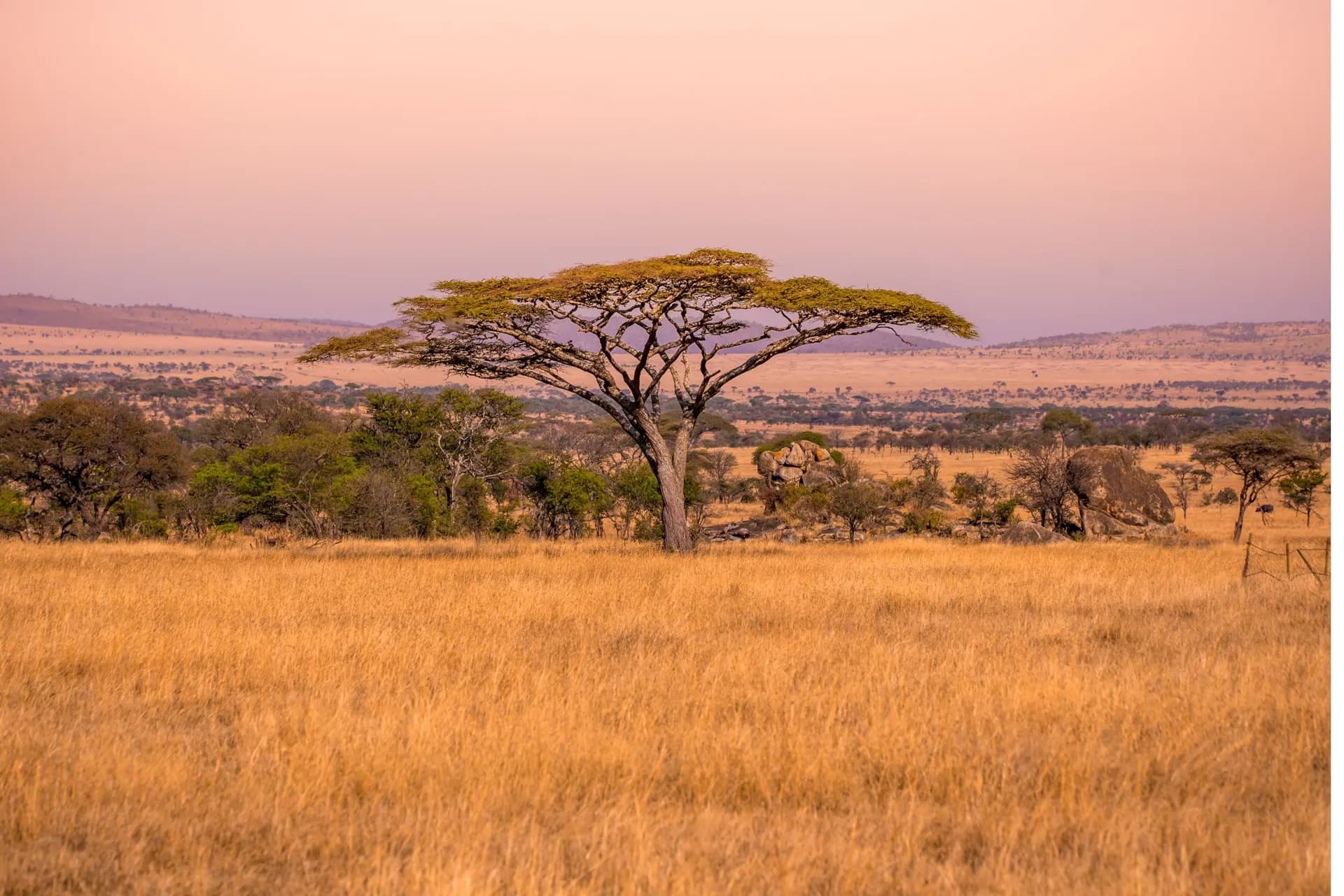
De Serengeti is een nationaal park van 14.763 km² in het noorden van Tanzania. De naam komt van het Maasai-woord Siringet, wat "eindeloze vlaktes" betekent. En eindeloos voelen ze inderdaad: horizon na horizon, savanne, acacia-bomen, graniet-uitstulpingen genaamd kopjes, rivieren met krokodillen — en overal dieren.
Het park is UNESCO Werelderfgoed en grenst in het noorden aan de Masai Mara in Kenia. Samen vormen ze het grootste wildsafari-ecosysteem ter wereld.
De zones van de Serengeti
Veel reizigers denken dat de Serengeti één plek is. Maar het park heeft duidelijk verschillende zones, elk met een eigen karakter:
Seronera (Centraal)
De Seronera-rivier trekt jaarrond wild aan — leeuwen, luipaarden, olifanten, nijlpaarden. Als je maar één zone kunt bezoeken, is dit het. Ik ken elke boom hier. Er zijn drie luipaarden die ik bij naam ken — ze verschijnen regelmatig in dezelfde bomen.
Het Noorden (Mara)
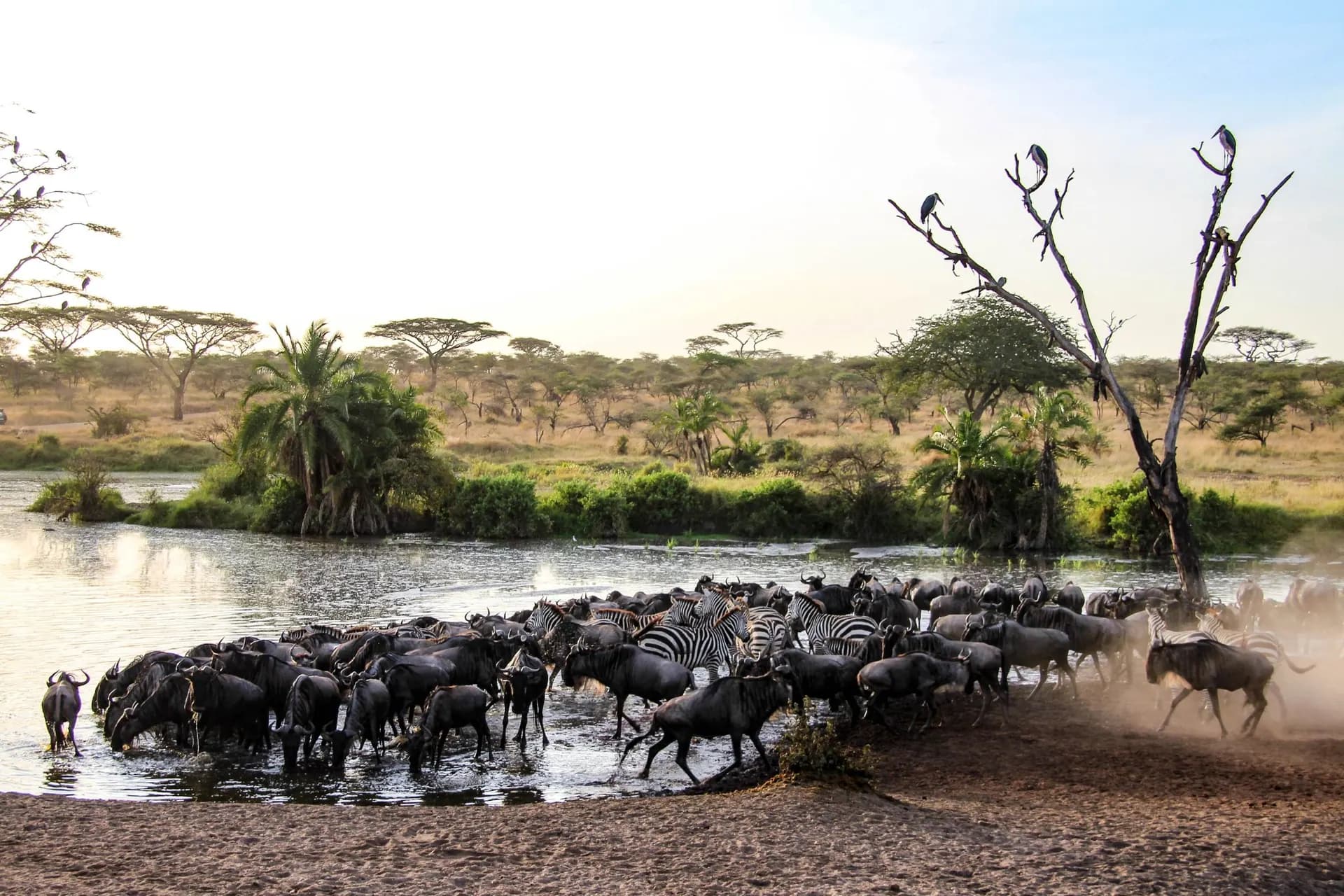
Hier oversteekt de Grote Migratie de Mara-rivier. Kiobo, Lamai Wedge, Mara River Camp — dit zijn de plekken waar je de oversteek kunt bijwonen. Enkel van juli tot oktober.
Het Zuiden (Ndutu)
Hier kalveren de gnoes in januari–maart. Tienduizenden baby-gnoes worden geboren in dit gebied, met roofdieren op de loer. Als je jonge dieren wilt zien, is dit het seizoen en de zone.
Het Westen (Grumeti)
Rustiger, minder bezocht, maar spectaculair door de Grumeti-rivier met zijn enorme Nijlkrokodillen. De Grumeti-oversteek in juni is het best bewaarde geheim van het park.
De Grote Migratie
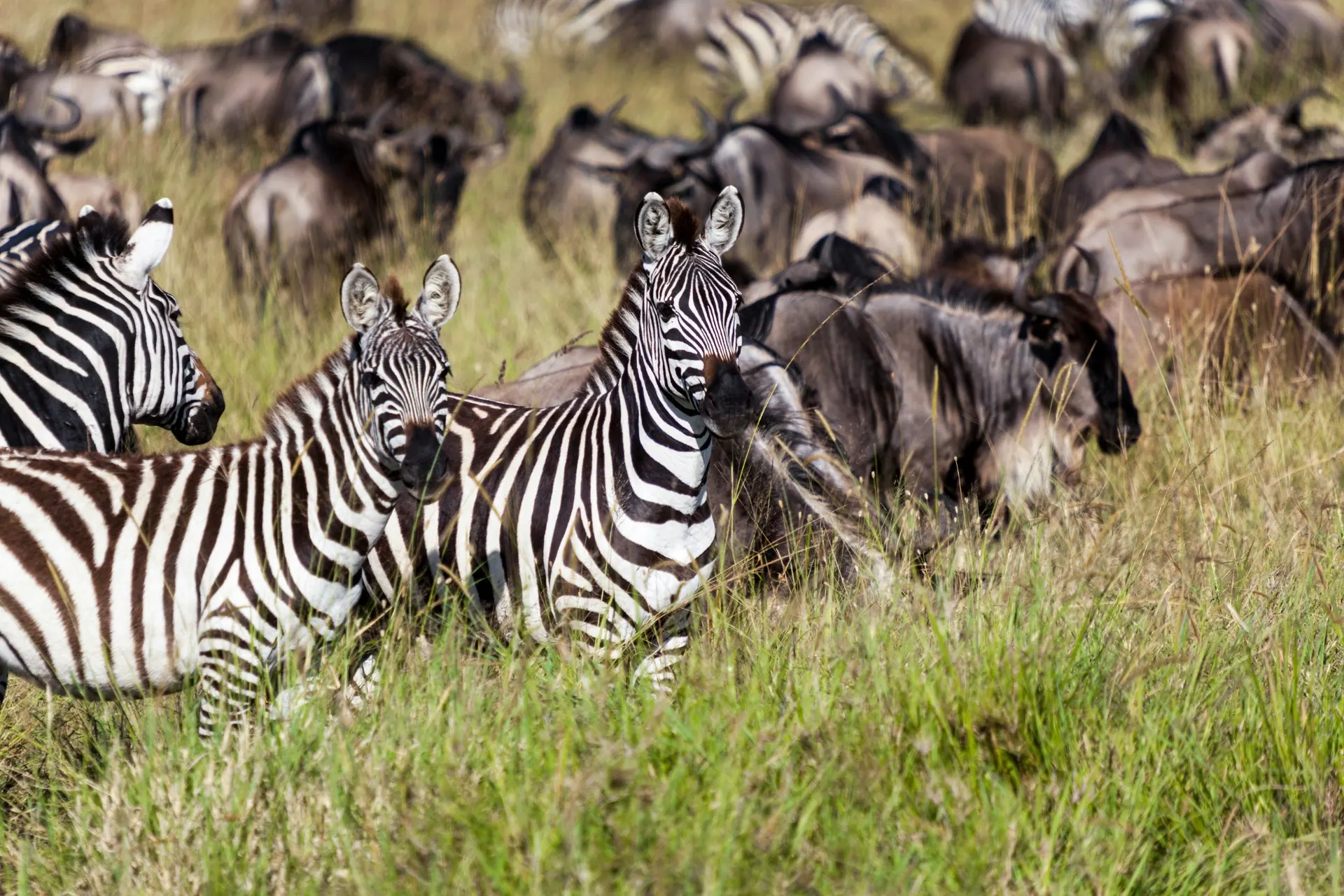
Er zijn mooie safari's en dan is er de Grote Migratie. Dit is het grootste landzoogdier-trekmars op aarde: 1,5 miljoen gnoes, 200.000 zebra's en 300.000 gazellen cirkelen jaarlijks door de Serengeti en de Masai Mara op zoek naar vers gras.
De cyclus is ruwweg als volgt: - December–maart: gnoes kalveren in het zuiden bij Ndutu - April–juni: trek naar het westen en noorden - Juli–oktober: Mara-rivier oversteek in het noorden — dit is het meest spectaculaire moment - November: terugkeer naar het zuiden
Elk jaar is anders. Wind, regen, grasgroei — alles bepaalt precies wanneer en waar de kudde verschijnt. Ik lees de tekens al twintig jaar. Dat weet je niet uit een reisgids.
De Grote Migratie is een cirkel, geen evenement. Er is altijd migratie-activiteit ergens in het park — welke zone en welk moment hangt af van het jaar. Vraag je gids een week voor vertrek naar de actuele positie van de kudde.
"Ik heb de Mara-oversteek meer dan honderd keer meegemaakt. En toch staat mijn hart stil op het moment dat de eerste gnoe het water in springt."
Wanneer ga je naar de Serengeti?
Er is geen slecht moment, maar er zijn uitgesproken goede momenten afhankelijk van wat je wilt zien.
Voor de Mara-rivier oversteek ga je in juli–augustus. De kans op een oversteek is dan het grootst, het droog-seizoen is aangenaam, en de dieren zijn geconcentreerd in het noorden.
Voor jonge dieren en roofdieren-actie ga je in januari–maart naar Ndutu in het zuiden. Baby-gnoes trekken cheeta's, hyena's en leeuwen aan.
Voor vogels is het groene seizoen (november–april) prachtig. Meer dan 500 vogelsoorten in de Serengeti — en ze zijn allemaal actief.
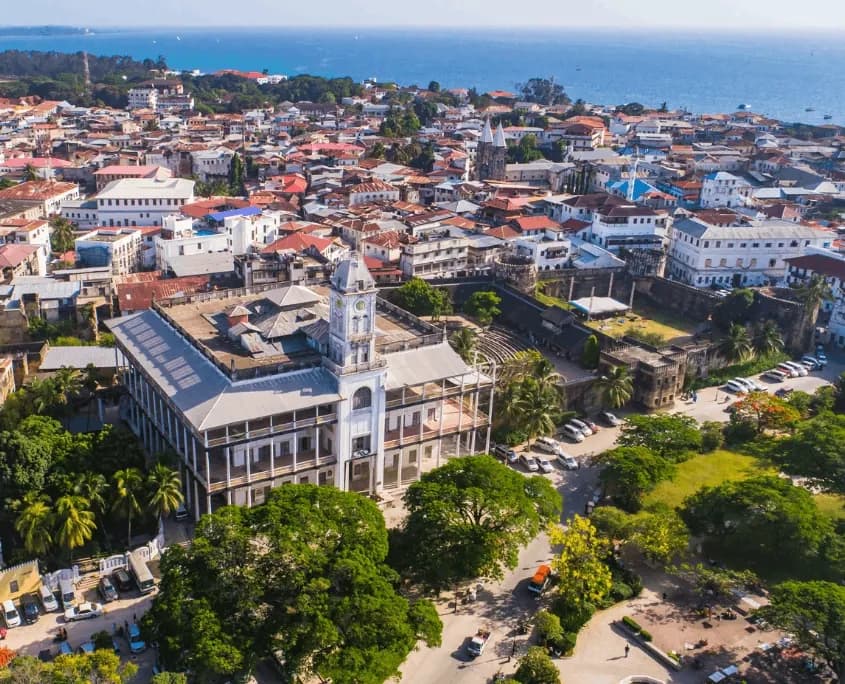
Voor een combinatie met Zanzibar is juni–oktober ideaal: droog in de parken en perfect strandweer op het eiland.
Hoe lang blijf je in de Serengeti?
Mijn eerlijk antwoord: minimaal 3 nachten. Twee nachten voelt te kort — je raakt net gewend aan het park en dan moet je alweer weg. Met 3–4 nachten heb je de tijd om de Seronera-vallei te verkennen, twee keer een game drive bij zonsopgang te doen, en rustig te wachten op het juiste moment.
Voor de migratie adviseer ik minstens 2 volle dagen in de Mara-zone. De oversteek kan je in een uur missen of 3 uur meemaken — geduld is alles.
Eerste keer Serengeti? Combineer 2 nachten Seronera met 2 nachten in Ndutu (jan–mrt) of de Mara-zone (jul–okt). Zo zie je twee totaal verschillende kanten van het park.
Overnachten in de Serengeti
Er zijn drie soorten verblijf: - Tented camps (onze favoriet): canvas tentjes op houten platforms, midden in de bush. 's Nachts hoor je de leeuwen brullen. Ochtendgericht op de vlakte. Onvergelijkbaar. - Lodges: vaste gebouwen, meer comfort, zwembad. Goed voor gezinnen of wie het rustiger wil. - Mobile camps: verplaatsen mee met de migratie. Duur, maar je slaapt altijd op de beste plek.
Ik heb een voorkeurslijst van camps per zone. Die deel ik graag persoonlijk — want het juiste kamp hangt echt af van wanneer je gaat, wat je zoekt, en wat je budget is.
Wat zie je in de Serengeti?
Naast de migratie: bijna alles.
De Big Five zijn hier allemaal aanwezig. Leeuw is de meest geziene — de Serengeti heeft een van de grootste leeuwenpopulaties ter wereld (3.000+). Luipaard is schuw maar ik ken de bomen in Seronera. Buffel zie je in grote kuddes. Olifant kom je ook tegen. De zwarte neushoorn is in de Ngorongoro Krater (apart van de Serengeti).
Bijzondere extra's: wilde honden (zeldzaam maar aanwezig), cheeta's in het grasland, bavianen, vervet-apen, jakhals, hyena, mongoes, varaan, giraffe, zebra — de lijst is eindeloos.
Praktisch: wat kost een Serengeti safari?
De parkkosten alleen al zijn hoog: $70 per volwassene per dag. In het hoog-seizoen (juli–augustus) loopt dit op. Tel daar accommodatie, gids, voertuig, transfers en parkeertarieven bij op — een realistisch budget is €2.500–€5.000 per persoon voor een volledige Tanzania safari inclusief Serengeti.
Bij Simba Tours zit de gids altijd inbegrepen. We werken zonder tussenpersonen, dus je betaalt eerlijke prijzen — niet de marge van een groot reisbedrijf.
Mijn advies als gids
Eén ding: neem de tijd. Mensen die twee uur in een game drive stoppen en dan doorrijden naar het volgende park missen het punt van de Serengeti. Wacht bij een leeuwin met jongen. Observeer de sociale dynamiek van een olifantenkudde. Kijk hoe een cheeta jacht. Dát zijn de momenten die je bijblijven.
En als je ooit de kans hebt om bij de Mara-rivier te wachten tot de gnoes springen — neem die kans. Het is het meest intense wat ik in de natuur heb gezien. Elke keer opnieuw.
Wil je weten welke zone en welk kamp het beste bij jouw reisperiode past? Stuur me een bericht via het reisvoorstel-formulier. Ik reageer binnen 24 uur met een eerlijk, persoonlijk advies.